Nutrition · Heart health · Investigation
Before 1978 It Was Marine Engine Lubricant. Now It Is In Almost Everything You Eat.
The oil that kept naval steam engines running was rebred, renamed and sold to American families as the heart-healthy choice. Here is what fifty years of it does to the lining of your arteries, why nothing in your medicine cabinet was ever designed to touch it, and the one thing that is.
The oil in your kitchen cupboard has a service history.
Before it was food, it was industrial lubricant.
Rapeseed oil greased the steam engines of the merchant navy and the warships that escorted them. It was the preferred oil for that job for one specific reason: it clings to metal that is wet with steam and salt water, where other oils slide off and the bearing runs dry. From the Industrial Revolution through the Second World War, that was the work it did. When the war cut off the European and Asian supply, Canada ploughed up land and expanded acreage to keep Allied engines turning.
Then the war ended. The steam engines went. Demand collapsed, and Canada was left holding a crop with no buyer.
They did not abandon it. They rebred it.
Through the sixties and seventies, Canadian plant scientists bred out the erucic acid that made the oil unfit to eat. The first low-erucic variety arrived in 1974. And in 1978 the industry registered a new trade name, because no American housewife was ever going to pour something called rapeseed on a salad, and nobody buys engine lubricant for their family.
Canola. Can-ola. Canadian oil, low acid.
Same plant. New name. New market. Your kitchen.

And it was not the first time this was done to us.
Cottonseed oil was waste. A byproduct of the cotton gin, produced in such volume that it was dumped in rivers and left to rot, until somebody worked out it would burn in a lamp and somebody else worked out it would boil into soap. In 1911 a soap company called Procter and Gamble hydrogenated it into a white paste, gave it the name Crisco, and sold it to American housewives as the clean, modern, scientific alternative to lard. They posted out free cookbooks to teach women how to use it.
That is the pattern, and it is more than a century old. An industrial byproduct with no buyer becomes a health food with a marketing budget.
Soybean. Corn. Cottonseed. Safflower. Canola. Go and read the back of anything in a box or a bag in your kitchen. Read what the restaurant fries in. Then look at the jug on the second shelf.
What fifty years of it actually does to a body
Here is the single most important paragraph on this page.
You are not made of what you ate last week. You are made of what you have been eating for thirty years, and it is still inside you right now.
The fat in seed oils is polyunsaturated, and polyunsaturated fat does not just pass through you. It gets built in. Into the fat on your ribs, around your organs, under your skin. And then it sits there.
In 1959, researchers measured the body fat of American adults. Linoleic acid, the dominant fat in seed oils, made up 9.1 percent of it.
By 2008 the same measurement came back at 21.5 percent.
It more than doubled. That is not what people told a researcher they ate. That is not a number in their blood on the morning of a test. That is their actual tissue, cut and measured.
And here is the part that should genuinely frighten you. The half-life of that fat in a human body is roughly 600 days. Almost two years to clear half of what is in there. The fat you are carrying today is a record of what you have been eating since around 2022. The layer under it goes back further. The layer under that goes back to the jug on the shelf in the eighties.
You are not exposed to seed oils. You are made of them. You are carrying a reservoir.

Why a reservoir of it is a problem
Cholesterol on its own does not damage the wall of an artery. The oxidised form does. When cholesterol is carried on fragile polyunsaturated fat and that fat rusts, the resulting particle is what your immune system attacks, what gets driven into the lining of the vessel, and what is physically found inside plaque.
Your artery has a thin inner lining. It is the layer that decides whether a vessel relaxes and opens or stiffens and stays narrow. It is not plumbing. It is a working organ, one cell thick, and it is what rusted fat corrodes.
You cannot feel one second of it happening. That is the cruel part. Rust does not hurt. Rust just works.
Why your annual blood work will never catch it
A lipid panel is a counting test. It measures how much. It does not measure what is happening to it.
Two people can walk out of the same lab with an identical LDL number while one of them is carrying fragile, oxidation-prone fat and the other is not. The panel cannot tell them apart. Neither can the doctor reading it, because there is no line on the form for it.
So the number comes back. The dose gets adjusted. Everybody is calm and polite. And the process that is actually corroding the lining has not been measured, discussed, or treated once, because there is nothing on the prescription pad that touches it.
Then next year the number is a little worse, and the dose goes up again. And that is described to you as your condition progressing, rather than as a treatment that was never aimed at the cause.
Now look honestly at what the medication is doing for you
I want to be careful here, because this is where articles like this usually go stupid and tell you to throw your pills in the bin. Do not do that. Read to the end and you will see exactly why.
But look at the numbers, because they are published and they are not disputed.
Among American adults with high blood pressure, 51.2 percent are taking medication for it. Only 20.7 percent have it controlled.
Read that twice. Half the country's hypertensives are medicated. One in five is actually controlled.
If a washing machine worked that badly it would be recalled. In this category it is called disease management, and it is not a failure of the business model. It is the business model.
Because think about what a pill that manages a number actually is, commercially. It is a subscription. You take it every day, for the rest of your life, and if you stop, the number comes back, frequently worse than before you started. That is why you cannot simply stop most of these on your own. Ask your doctor what happens if you quit a beta blocker overnight, and watch how carefully he answers. That is not a side effect. That is dependency, and it is designed in.
A cause that gets fixed is a customer who cancels. A number that gets managed is a customer for life. Nobody had to be evil for it to end up this way. The incentives did it on their own, and they have been running for forty years.
And the ladder only goes one direction. One pill becomes two. Two becomes three. The diuretic flushes magnesium and potassium out along with the water, and pushes up your blood sugar and your uric acid, so now there is a conversation about your glucose. The ACE inhibitor gives you the cough you were told to live with. The statin gives you the ache in your calves that never got worse and never went away, and that you stopped mentioning years ago because there was nothing to be done about it.
Your doctor is not the villain here. He has fourteen minutes, a protocol written by people who will never meet you, and a legal exposure that makes departing from that protocol career-ending. He is as trapped in it as you are. He is doing the only thing the system pays him to do, which is manage your number.
So keep taking every one of them, exactly as written, and tell your doctor what you add. I mean that, and not as a legal hedge.
I mean it because it is the entire point. This is not instead of. This is the thing that was never on the list at all.
The part nobody tells you: it drains
Go back to that 600-day half-life, because it cuts both ways.
The same slow turnover that let this build up in you across thirty years is also the reason it comes back out. Stop the input and the reservoir drains. Not in a week, and not in a month, but over two to three years the fatty acid composition of your own tissue genuinely changes. Your body is not a sentence. It is a balance, and you have been feeding one side of it your whole life.
Which gives you exactly two jobs. Only two.
One: stop pouring it in. Read the back of the bottle. Cook in butter, ghee, tallow, or real olive oil. Assume anything fried outside your own kitchen was fried in seed oil, because it was.
Two: protect the fat that is already in you while it clears. This is the one nobody helps you with. You are carrying a reservoir of oxidation-prone fat right now, it will be there for years, and it is rusting the entire time, no matter how perfectly you eat starting tomorrow morning.
There is nothing in your medicine cabinet for job two. There is nothing on your lipid panel for job two. There is no billing code for job two.
But there is something for it, and the people who worked it out did so about six thousand years before anybody wrote down the word cholesterol.
The tree that had to solve this problem first
An olive tree has exactly the same chemistry problem you do.
It hangs its own fat, in the fruit, on a branch in the middle of Crete, in full sun, at thirty-five degrees, for months on end. If that fat oxidised the way fat wants to, the tree could not reproduce and the species would be finished. So the tree makes its own rust protection: a bitter compound called oleuropein.
Oleuropein exists for one purpose. To stop fat from oxidising.
And here is the part that never made the trip to America. When researchers went looking for why people around the Mediterranean keep their hearts so long, the credit went to the olive oil, and olive oil went into every kitchen in this country at thirty-five dollars a bottle.
The oil carries a trace of oleuropein. The leaf carries the dose.
Gram for gram the leaf holds around 63 times the polyphenols of extra virgin olive oil. 100 grams of leaf is roughly 1,450 milligrams of polyphenols. 100 millilitres of good oil is about 23.
The Greeks never stopped using the leaf. It is brewed as a tea, in the morning, from a small kettle, by women who are now in their eighties and still out-growing their neighbours' tomatoes. The leaf was the medicine. The oil was dinner. Only one of the two ever got a marketing department.
“In Greece the oil is the food. The leaf is the medicine. You all bought the food. Nobody ever sold you the medicine.”
Effie, daughter of Crete, to her neighbour over a fence post in Ohio

Why most olive leaf does nothing, and why people quit
If you have tried olive leaf before and felt nothing, you were probably right to feel nothing.
Go and look at the old bottle. Most of them print a large milligram number of ground leaf powder on the front and stay completely silent on the back about the only figure that matters: how many milligrams of oleuropein are in a serving. Powder is not a dose. A milligram count of leaf tells you as much about the active compound as the weight of an orange tells you about its vitamin C.
Heat is the second problem. Oleuropein is delicate, the cheap way to extract it cooks most of it off, and the label will not mention that either.
So before you buy any olive leaf at all, from us or from anybody:
What the label has to say, or put it back on the shelf
- Oleuropein stated in milligrams per serving, on the label, in numbers
- Standardised extract, not ground leaf and not powder
- Cold water extracted, because heat destroys the compound
- Every batch third-party tested for oleuropein content and purity
- One ingredient, not a blend that gives you a pinch of everything and a dose of nothing
- Origin stated, and a company willing to say where the leaf was grown
Very few bottles survive that list. We went looking specifically because of the seed oil problem, and the same small company kept coming back: Alfrea. Most readers will never have heard of it. Neither had we.

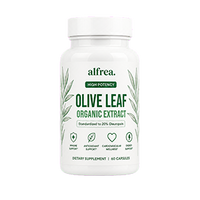
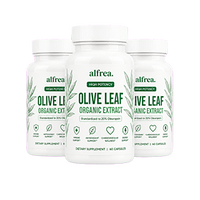
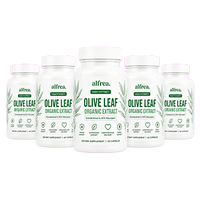
Alfrea Olive Leaf Extract
150mg of oleuropein per daily serving, printed on the label in numbers
- 750mg standardised extract per daily serving, 20% oleuropein
- 150mg oleuropein, above the highest dose used in the human trials
- Cold water extracted in small batches so the compound survives
- Every batch third-party tested before it is filled
- One ingredient. Leaf grown and harvested on Crete, made in the USA
- Two capsules with breakfast, alongside everything you already take
- 90-day money-back guarantee, and you keep the bottles
One ingredient, aimed at job two: protecting the fat already circulating in you while the reservoir drains. Alfrea is one of the only labels in America that prints the oleuropein figure instead of hiding it behind a leaf-equivalent number.
One-time purchase · Free shipping · Ships from the USA
What actually happens, week by week
- Weeks 1-2
The first thing that has ever fought back
Two capsules in, and for the first time in thirty years the rusting has something standing in its way. 150 milligrams of oleuropein enters your bloodstream and goes straight at the oxidation, on the fat that is already circulating in you, on day one.
You will not feel it happening. Understand why that matters, because it is the whole argument. Nothing that works on a cause can be felt. You feel caffeine. You feel a painkiller. Those work on sensation. This works on the wall of an artery, silently, which is exactly where the damage has been working on you, silently, since 1987.
The rust never announced itself either. Neither does the thing that stops it.
- Weeks 3-4
2,000mg in. The lining stops losing ground.
You have now put more oleuropein through your body than a decade of olive oil delivers. The assault has slowed enough that the inner lining can get back to its actual job, which is deciding whether your vessels relax and open or stay tight.
This is where the first reports start, and they are never fireworks. Steadier through the afternoon. Clearer in the evening. Warmer hands and feet. Nobody writes to us about miracles at week three and we would not believe them if they did.
- Weeks 5-8
4,000mg. The window the studies were built around.
The shortest human trial on standardised olive leaf ran six weeks, and this is the stretch it measured in. It is also where our customers stop describing how they feel and start describing what they did.
They took the long way round the block. They opened the checkup reminder the day it came instead of leaving it on the counter for a week. They stopped lying awake at two in the morning doing arithmetic on the age their father was.
That is what this actually buys, and it is worth more than any number on a form. You stop feeling like you are only waiting for something.
- Months 3-24
8,000mg and climbing. Now you change what you are made of.
This is the timeline nobody quotes you, and it is the only one that decides anything. Your body fat carries a 600-day half-life. Keep the seed oils out, keep the protection in, and the reservoir you have been building since the eighties genuinely drains.
At that point you are not managing a number. You are replacing the material your body is built out of.
Bring the bottle to every appointment and let them read the label. Then let the scan say whatever it says, knowing that for the first time in your life something you take every morning is aimed at the thing it measures.
90-day money-back guarantee · Ships from the USA
"He was on three pills and still going dim"

"I threw out the jug in March. In May I heard him singing."
My husband Dale is 66. He has taken his pills at the kitchen window every morning since 2019, three of them now, and his numbers are, and I am quoting his doctor here, beautifully managed. And somewhere in the last two years the man stopped singing. He sang bass in our church choir for 31 years and one Thursday he just did not go, and then he did not go the next week either, and he blamed his back.
I read an article like this one in March and I want to tell you what actually got me, because it was not the arteries. It was the jug. I have fried this family's chicken in Wesson since 1987. Two jugs a month, most months. Forty years of birthday dinners and church fairs and Friday fish, and I made every bit of it with love out of a bottle that used to be lamp oil.
Nobody ever told me. I go back and forth over which is worse, that nobody lied to me or that nobody told me.
I am not a supplement person. I am a retired bookkeeper and I read labels the way I read ledgers. Alfrea was the only olive leaf bottle I could find that put the oleuropein number on the front. 150 milligrams. Everybody else printed a big number of powder and went quiet.
Week one, nothing. Week two, nothing, and the page had already told me that would happen, which is the only reason I did not quit. He kept taking them with his coffee because that is how Dale is about anything he has decided.
Somewhere in week five he started taking the long way round the block in the evenings. Week eight he went back to Thursday practice without announcing it, and that Sunday I heard him from the pew before I saw him, and I had to look at the hymnal for a while.
He brought the bottle to his April checkup himself, his idea, not mine. His doctor read the label, said keep every prescription exactly as it is, this is fine alongside them, and typed it into the chart. Dale reported all of that to me in about nine words.
There is a green bottle of olive oil on my second shelf now and no yellow jug. I cannot give you a number for any of this and I would not trust one if I could. I can tell you there is a man singing in my kitchen again.
 Carol W. · 64, Dayton, Ohio Verified buyer
What people ask us before they order
The decision most people almost do not make
Three prescriptions after insurance runs a typical household around $67 a month, every month, for the rest of a life, and not one of them comes with a promise of any kind. Fourteen years of thirty-five dollar olive oil comes to about $5,880. Nobody asked either of them for a receipt.
A 150-day supply of Alfrea works out at about 60 cents a day, and it is the only thing in this entire story that will give you every dollar back if it does not earn its place.
The oil stays on the counter. It is food. The pills stay on the windowsill, exactly as prescribed, and your doctor gets told. The only thing that changes is that somebody in your house is finally minding the fire.
And you have been carrying that reservoir for thirty years. It drains on a scale of years, not weeks. Which means the only genuinely bad decision available to you today is another year of thinking about it.
90-day money-back guarantee · Ships from the USA